 Princeps

Princeps is in very early development.
Everything on this page is a work in progress and subject to change: the frames, the systems, the tiers, even the name of a thing. There is no release date and no store page. What follows is where the game is headed, and how far it has come.
A vast, old land, new each game
Every game begins on a land generated as it starts: about twenty kilometres across, with old forests, rivers that find their way to a coast, and stone older than anyone who will live there.
It opens humble. A few households arrive in a wide, airy country, and for a long while the land is larger than anything they will build. Good ground comes in pockets and strips shaped by the terrain, broken by knolls and hollows, wet swales, outcrops and old trees, so the first village follows the land rather than a grid.
The air stays clear to the horizon. What lies beyond your people’s sight is unknown until someone goes to look.
- About 20 km across
- Generated as each game starts
- Forests, rivers, a coast
- Explored as you go
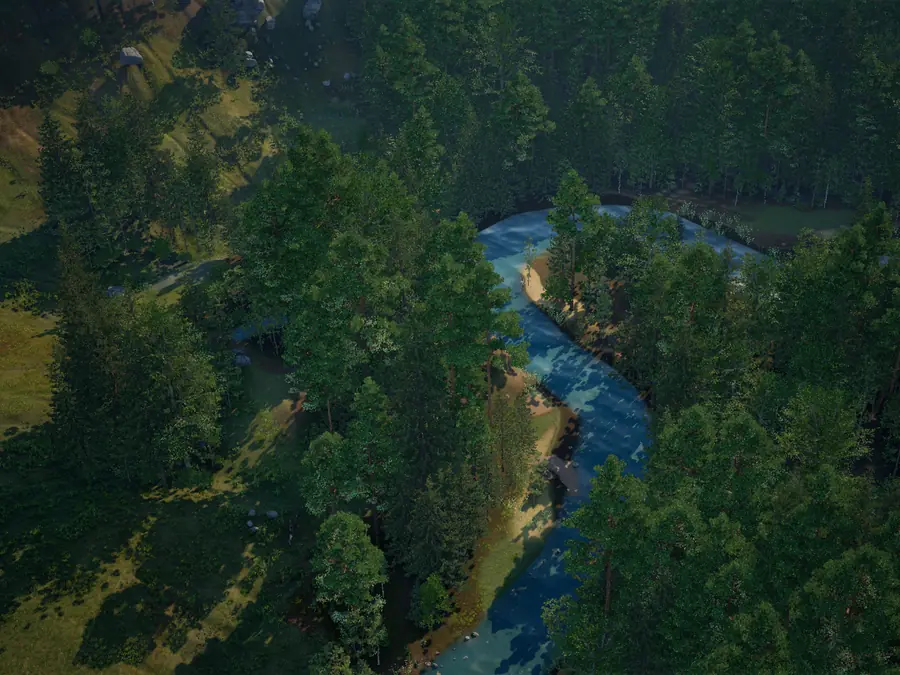
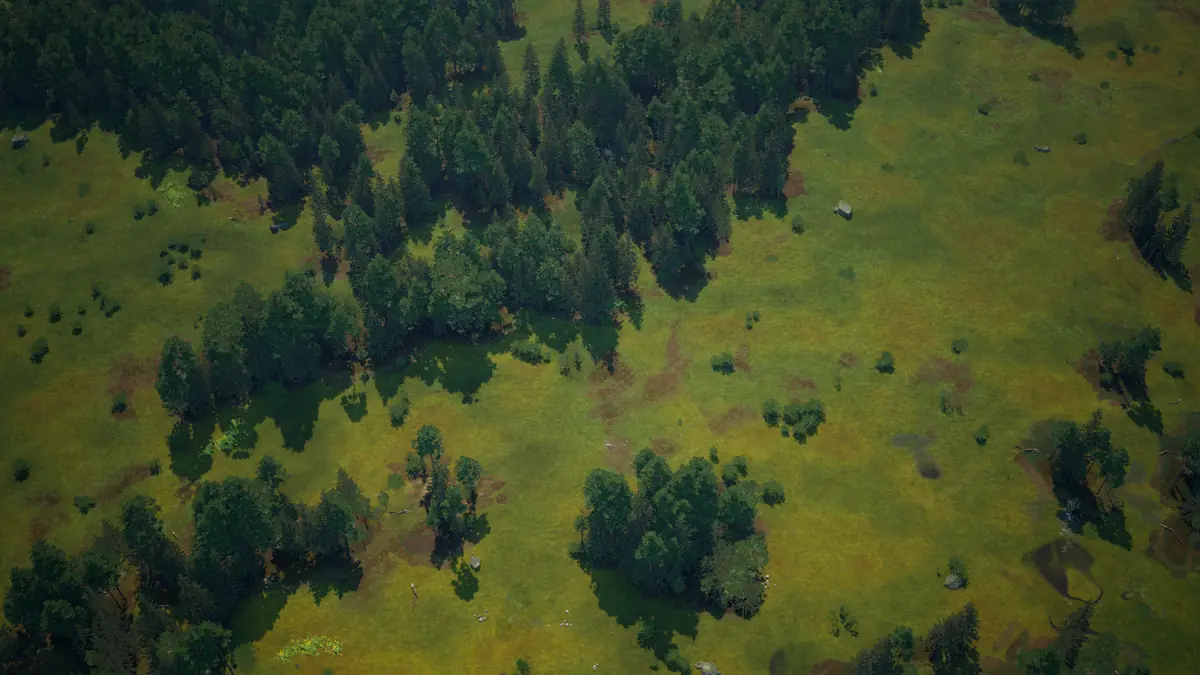
Forest and meadow from the camera’s highest reach. What the land holds, from berries to boulders to clay on a riverbank, shows on the land itself.
The land’s bones
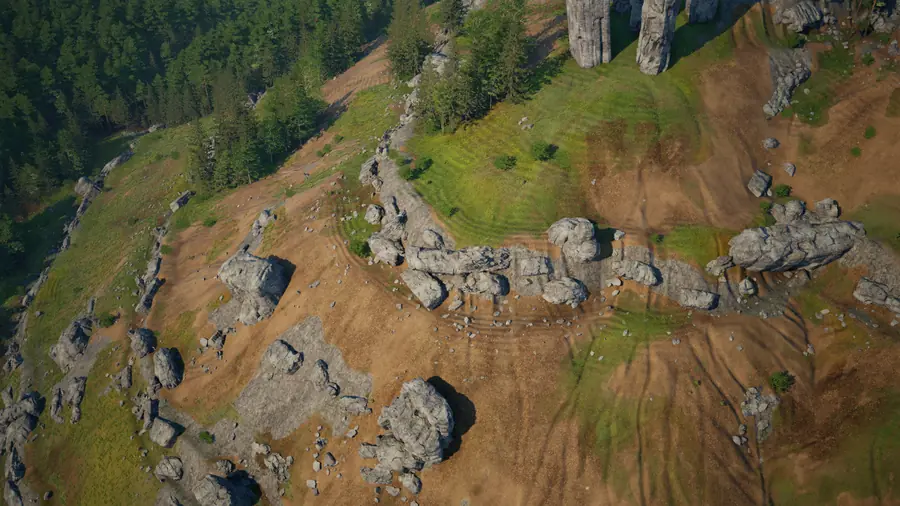
Stone rises across the map, overgrown with moss, grass and trees: outcrops and pillars that help you find your way. Planned: ruins older than the settlement, and a growing town that builds around its old stones, or with them.
Also planned: high ground that matters, where a hill commanding the country is worth the climb, and the hauling, to raise a watchtower.
Found the village
You are the lord: the first House among the households who arrive with you. The village gathers round your estate, as villages once gathered round a villa for protection after Rome fell.
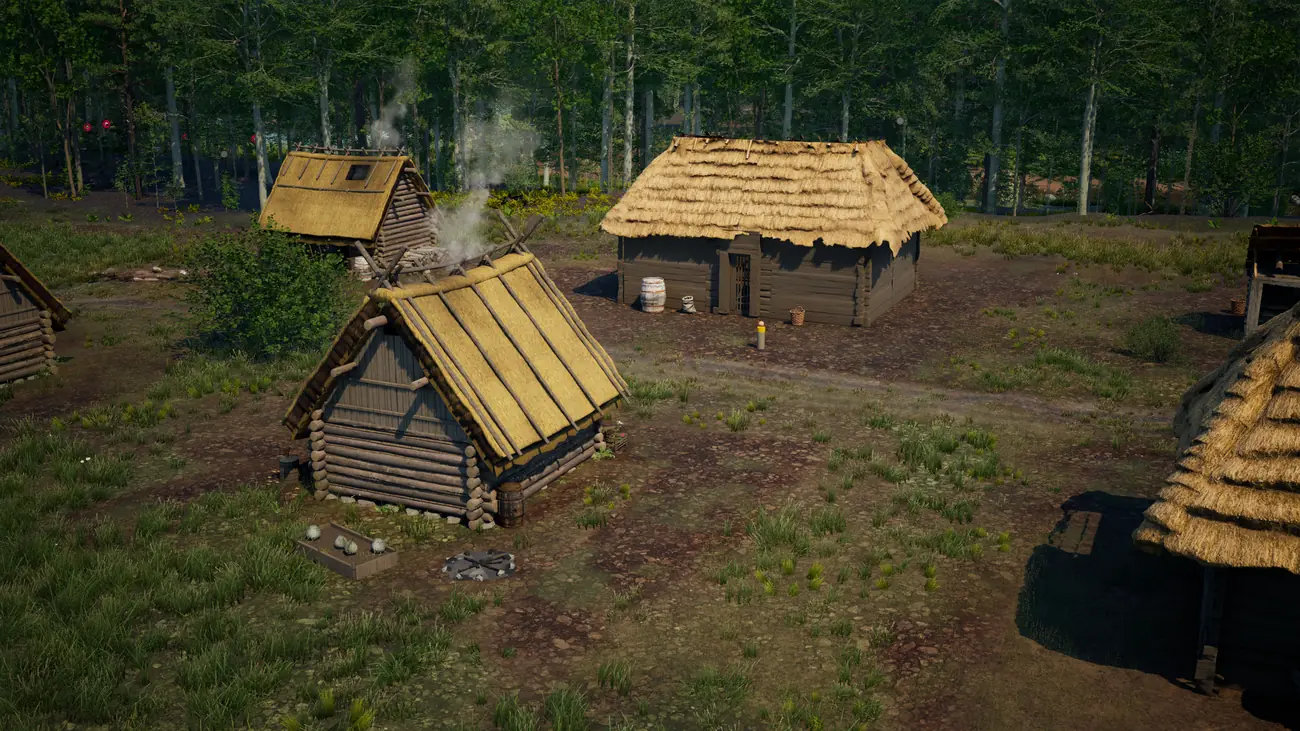
You say what and where. The households decide who and how.
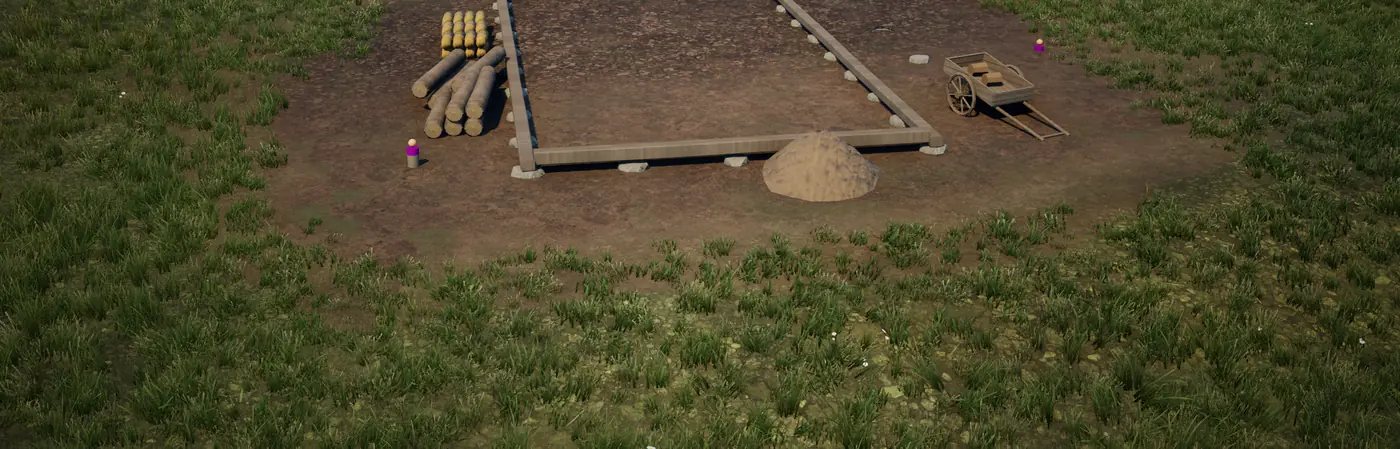
Mark out homes and workplaces, set the forager’s ground and the woodcutter’s, lay down dirt roads. Every trip is walked over the real ground, so distance costs time and the layout matters.
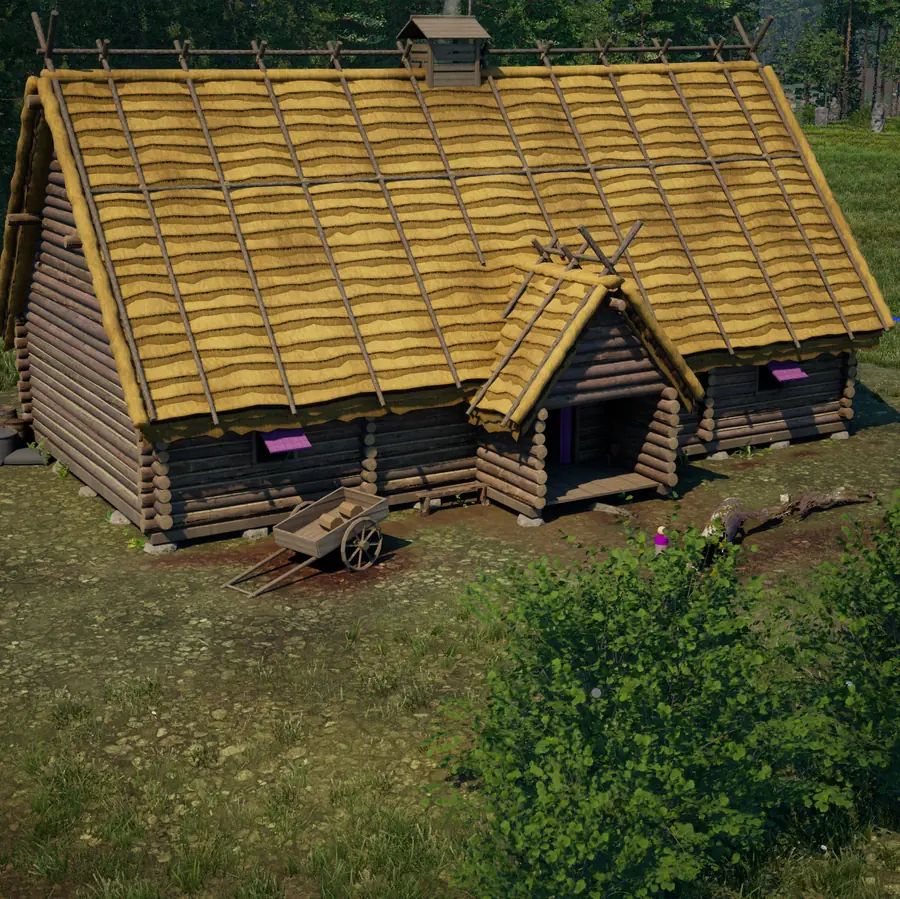
At the start, everything is what founders can make with axes, hands and the land: logs, wattle and daub, thatch, pegs instead of nails, shutters instead of glass. The aim is that a building shows only what its makers could have made, so iron and glass will have to come from somewhere.
And the year turns. Stores must be laid in before the harvest ends; the first winter is where the founding is being tested now.
From hovel to city-state
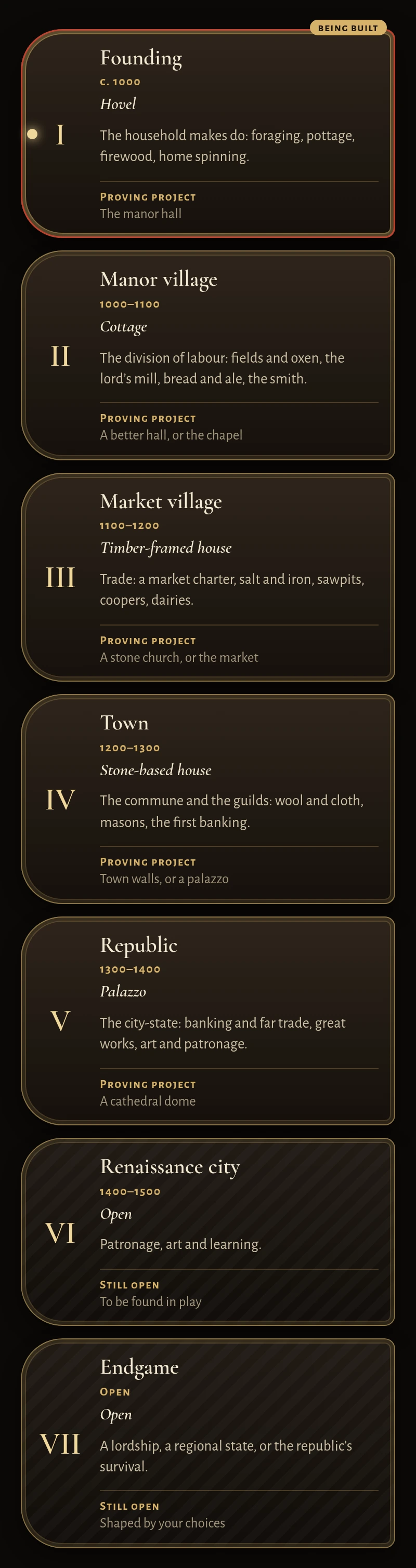
The settlement climbs in tiers across roughly five centuries, from households making do to markets, guilds and a commune, and at last a city-state.
The plan: households upgrade their own homes when their needs are met, so a hovel becomes a cottage once its household has come through a winter with grain, clothing and firewood. A prosperous estate draws settlers, who bring more needs, more hands and the next production chains.
A chain is meant to be deep while it is the focus. Once it runs, you will be able to hand it to an office, the reeve first and the guilds later, and it folds into a single line. It still breaks when an input fails, and the break spreads.
To rise a tier, a settlement will prove it can run there
- PeopleEnough of them, and enough homes already living at the next tier’s needs. Households rise first; the settlement follows.
- CapacitySteady output, not a stockpile: timber and nails delivered at a rate through a season, by a chain that works.
- A proving projectA signature build that spends that capacity and is the visible step: the better hall, the stone church, the walls, the dome.
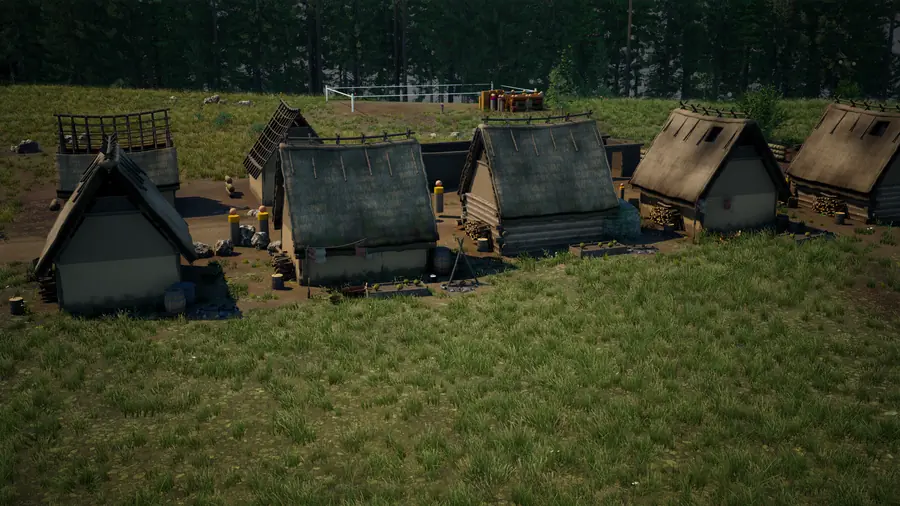
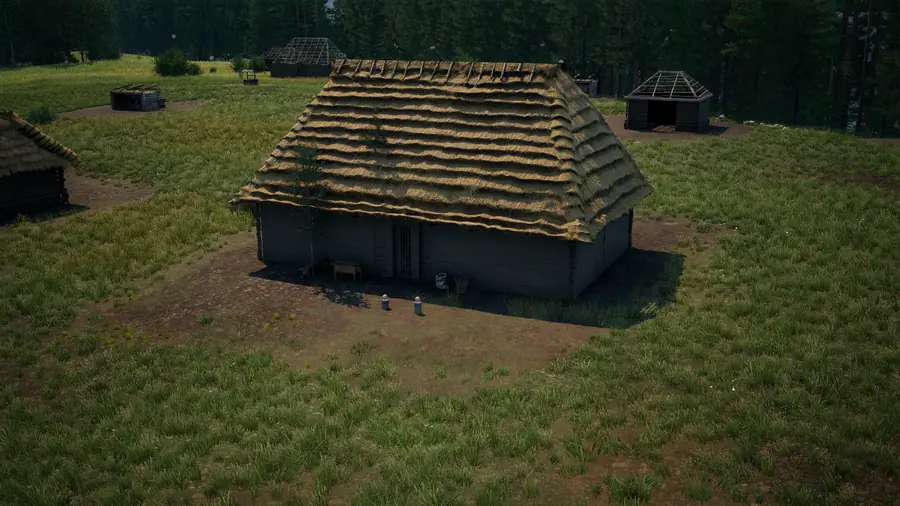
The founding tier is what is being built and played today. The tiers beyond it are a map of the arc, sketched from history, and will change as the game is played.
Your seat, or the community?
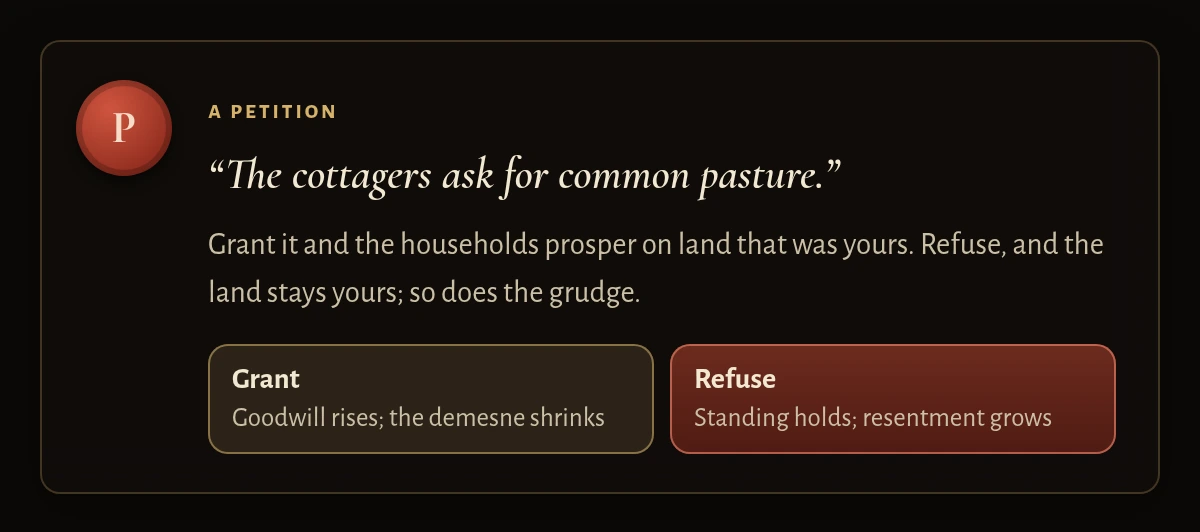
The lord is meant to be a character, not an eye in the sky. The founders are close to you. Later arrivals will not be, and they will come with demands you may not want to grant.
As planned, each tier is proved by a signature build, and you choose which: your own seat, first the hall and later a palazzo, or an institution for the community, from the chapel to the market, the town hall and the cathedral. Either opens the tier. They pull the settlement different ways.
The lord’s cut is planned to divide what the land yields between your household and everyone else’s. Hoard, and the commoners’ goodwill drains away; share, and your own House grows restless. Noble families are to come asking to join, with labour, followers and ambitions of their own, and one of their first demands may be an estate to call theirs.
History made this choice more than once. One Italian commune shut its magnates out of government; later, the Medici ruled through the republic’s institutions rather than over them. The late game is meant to stay open the same way: a lordship if the seat wins, a republic if the community does, or something in between.
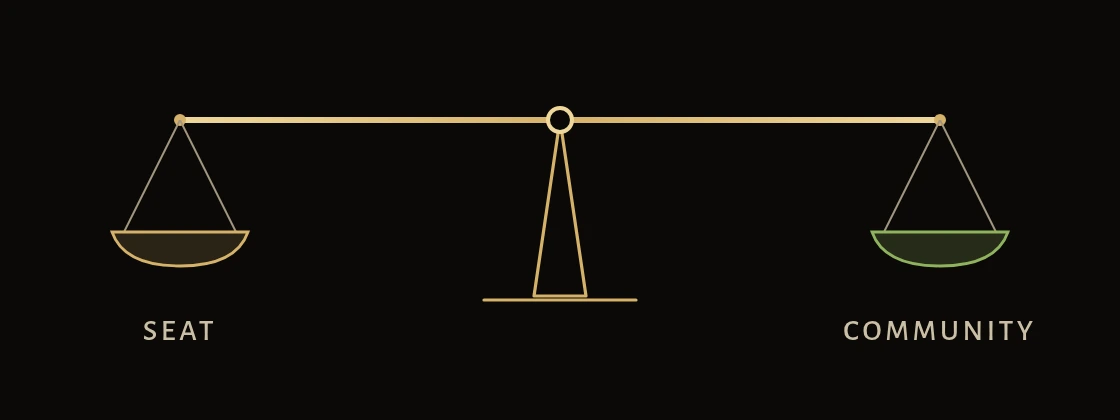
The seat
Legitimacy among the Houses, stronger dues and levies, a bigger refuge, the high ground. The cost: resentment, louder petitions, settlers who stay away.
The community
Contentment and loyalty, a stronger draw for settlers, the Church’s favour, market income. The cost: power drifts from you to the commune and the rising Houses.
Old problems, played
The problems two old books wrestle with are the ones the player is meant to wrestle with.
-
Plato
The Republic
A city is born from needs.
Food, shelter and clothing first, then the trades that serve them; then luxuries, which need more land, and soldiers to take it. The needs that drive the tiers start here.
-
Machiavelli
The Prince
The nobles wish to dominate; the people wish not to be dominated.
Fortune is a river in flood, and the prudent build dykes in calm weather. Hard risks rather than slow growth, and a lord who must choose whom to rest on.
Where it stands
Princeps is being made in Unreal Engine 5, one playable step at a time, each step played before the next is planned.
- Playable in the current build: the generated land; founding the estate with homes, workplaces, roads and the manor; households who gather, haul and build; the seasons turning toward winter.
- Planned: the tiers beyond the founding, the Houses and their petitions, the lord’s cut, shared land and its rules.
- Placeholders: settlers are simple stand-in figures for now, and much of the art will change.
- Not yet: no release date, no store page, no price.
From the devlog
All posts →Fetching the latest posts…